

Americans’ views on health care increasingly reflect deeper values and belief systems – differences that demographics and party identification alone can’t fully explain. Understanding those differences gives us a clearer picture of how audiences may respond to messages, messengers and information sources across health care issues.
The big picture: Health care sits at the center of many of America’s biggest social, political and cultural shifts. These forces shape who people trust, what they believe and how they respond to information.
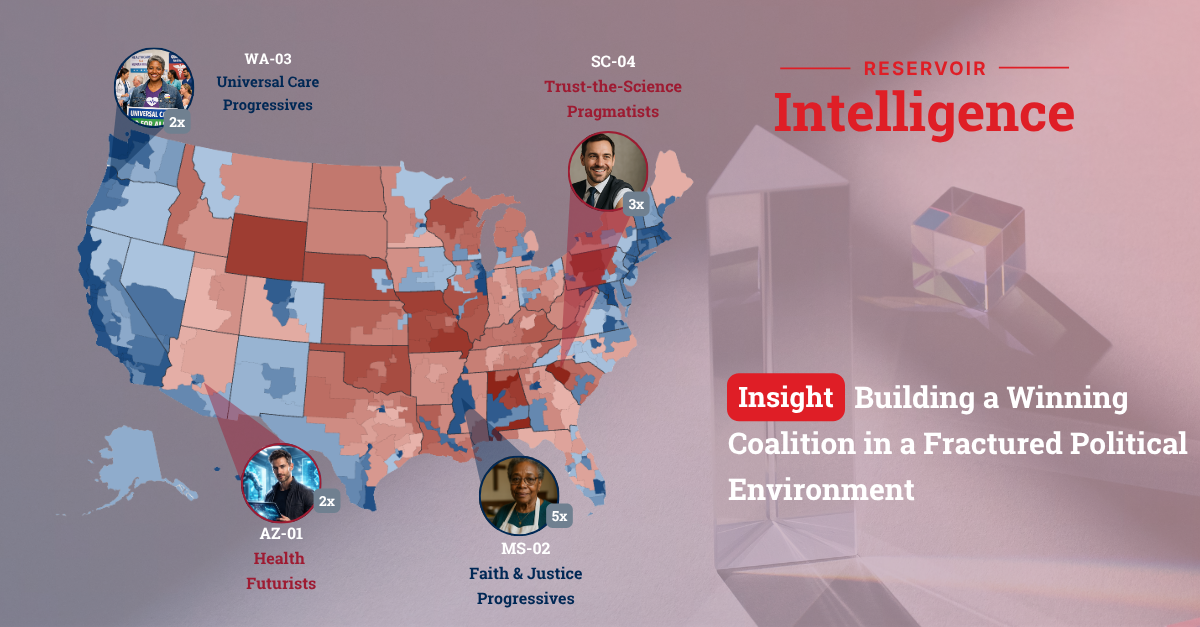
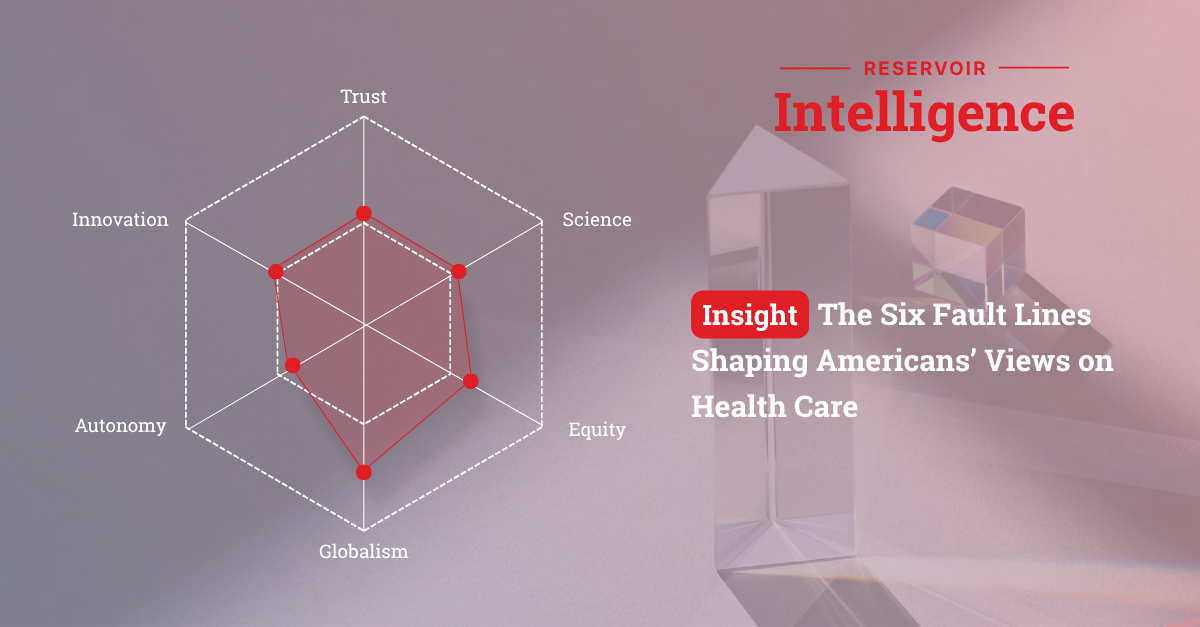
What we know: PRISM, Reservoir’s audience intelligence platform, identifies six underlying fault lines shaping Americans’ views on health care today – from personal choice to science and America’s role in the world. These fault lines allow us to model how specific audiences – including voters in key states and congressional districts, as well as federal policymakers – may respond to different messages, messengers and information sources.
Why it matters: People who look similar on the surface can reach very different conclusions – or reach the same conclusion for different reasons. Understanding what drives those views helps tailor messages and choose credible messengers and sources of information for the audiences that matter most to policy and advocacy goals.
The six fault lines, explained:
- Trust | Who deserves the benefit of the doubt? Some people trust established institutions and experts. Others see that same authority as a reason for doubt. The source of a message can matter just as much as what it says.
- Innovation | Who should drive progress? Some see health care companies as a source of expertise and breakthroughs. Others see corporate incentives that need reform. Views on the role of industry, markets and government shape which solutions people support.
- Science | What should guide health decisions? Some put greater trust in scientific evidence and new technology. Others put more weight on natural approaches and fewer interventions. What signals progress to one audience may raise concerns for another.
- Autonomy | When should personal choice give way to collective need? Some believe health decisions belong to the individual. Others support limits when the broader community’s health is at stake. Support can hinge on whether a health care message emphasizes personal choice or shared benefit.
- Globalism | Whose interests should come first? Some see global cooperation as essential to health and innovation. Others want U.S. patients, workers and capabilities prioritized. Views shift based on whether global engagement is perceived as advancing or competing with American interests.
- Equity | Who is responsible for better health? Some audiences emphasize structural barriers beyond individual control. Others stress personal choices and responsibility. People can share a commitment to fairness while disagreeing on what a fair health system requires.
The takeaway: An effective strategy starts with understanding what drives your audiences. PRISM brings those deeper beliefs into focus, helping you connect your policy and advocacy goals to what matters to the people you need to reach.
Get in touch to learn how PRISM can inform your strategy: prism@reservoirhealth.com.