Perspectives on the forces shaping health
Reservoir Health experts share analysis and ideas on the dynamics shaping health care decisions.

Reservoir Health experts share analysis and ideas on the dynamics shaping health care decisions.
Health care decisions are shaped by policy, evidence, trust, market dynamics, public debate, and individual experiences of patients and stakeholders. We share our perspectives to help leaders make sense of those forces and identify what to do next.
Reservoir Communications Group Rebrands as Reservoir Health, Reflecting Breadth of Health Care Expertise & Capabilities
New identity reflects firm’s integrated capabilities across policy, market enablement, and communications with a dedicated focus on helping health innovation reach patients
WASHINGTON, D.C., September 2, 2026 — Reservoir Communications Group today announced that it is now Reservoir Health, a new brand that reflects the firm’s longstanding focus on health care and expanded capabilities to help innovators shape policy, communications and market environments in support of patient access.
“Health care has always been our North Star, and our new brand reinforces our deep subject matter expertise and experience working across the health system and the innovation lifecycle to deliver creative, data-driven solutions that support patients,” said Robert Schooling, Reservoir Health Founder and President. “Our growth and expansion in policy, market enablement, and communications over the last decade has allowed us to serve as our clients’ ‘go-to’ for their most complex challenges and issues.”
Since its founding in 2014, Reservoir Health has grown from a public affairs and communications firm into an integrated strategic advisory firm for health care innovators. Its team brings experience from across the health system—including government, politics, media, patient advocacy and care delivery—and serves innovative life sciences and health care companies, trade associations and nonprofit organizations.
In November 2024, Reservoir Health announced an investment partnership with Periscope Equity, a Chicago-based private equity firm that partners with founder-owned, technology-enabled business services companies. The partnership between Reservoir Health and Periscope has focused on accelerating the firm’s growth and scale while broadening the firm’s capabilities in support of existing and new clients.
Reservoir Health’s expanded model is further strengthened by its recently announced acquisition of Applied Patient Experience, LLC (AppliedPX), a leading patient engagement and patient-centered research consultancy. The combination introduces a fully integrated patient evidence capability to Reservoir’s existing work across policy, communications and market readiness and positions the firm to help clients translate patients’ lived experience into decision-grade evidence that informs clinical development, regulatory strategy, market access, and patient and provider adoption.
Reservoir Health’s work is underpinned by its research team which delivers strategic insights and a clear roadmap for engagement through advanced qualitative and quantitative platforms, including our proprietary PRISM model.
To learn more about the Reservoir Health team, click here. For Reservoir Health Insights, click here.
Reservoir Health is a leading health care consultancy that helps innovators anticipate and shape the environments—policy, communications, and market—that determine which innovations reach patients. Based in Washington, D.C., the firm brings decades of experience across the health system, government, media, and patient advocacy to deliver integrated, data-driven solutions to health care’s most complex challenges.

Earlier this month, I traveled to Birmingham, Alabama and New Orleans, Louisiana to attend conferences hosted by the National Medical Association and the National Association of Black Journalists. As a former journalist, a health equity advocate, and a person who is deeply invested in positive outcomes for communities of color and other marginalized groups, I was grateful to engage in meaningful dialogue around health disparities and health equity in a region plagued by diverse health challenges that impact overlooked rural and urban communities.
While these were two very different conferences, both fostered important conversations around issues that disproportionately impact Black communities, such as HIV prevention and treatment, maternal morbidity, mental health, and reproductive care. Whether you’re a Black doctor or a Black journalist, these topics are important to address and hard to ignore. Prominent health care leaders and journalists spoke at length about the importance of awareness and the need to amplify solutions to our most pressing health care problems. After a week of education and inspiration, I returned to Washington with two important takeaways.
Legacy institutions still matter.
The National Medical Association (NMA) is the oldest and largest organization representing African-American physicians and health professionals in the United States. Founded in 1895, the NMA is the collective voice of more than 30,000 Black doctors and the patients they serve.
The institution was founded in the years after Reconstruction was violently rolled back across the South, an era when the majority of Black Americans were disenfranchised, denied education, and neglected in the health care system. The NMA was created for Black health professionals who found it necessary to establish their own medical societies and hospitals. The institution’s primary focus then and now is to empower communities of color and the medically underserved.
“There is no one else who’s been working on health equity since 1895. When George Floyd died, we saw a resurgence in health equity initiatives. But when you talk about consistency, we have never wavered,” said Dr. Yolanda Lawson, MD, FACOG, National Medical Association President and Founder of MadeWell OBGYN.
Founded in 1975, the National Association of Black Journalists (NABJ) has been fighting for a voice in our nation’s newsrooms ever since. Forty years ago, Black journalists comprised less than 2% of people in the media industry. According to a 2022 Pew Research Center survey, only 8% of journalists identified as Hispanic, 6% as Black and only 3% as Asian. While progress has been made, our nation’s newsrooms remain overwhelmingly white.
Healthcare is the headline.
While at NABJ’s conference, I learned that newsrooms across the country have recently embraced a concept known as “solution journalism.” This approach to news encourages reporters to bring public attention to remedies to systemic inequity instead of simply amplifying the complexity and severity of the problem itself.
Endless barriers impede the average Black person from attaining a good bill of health. Social determinants of health account for 80-90% of health outcomes. Low-wage workers, living in low-income neighborhoods, frequently lack the physical assets needed to support good health. This results in significant place-based inequities with profound consequences. These communities experience limited access to transportation, reduced access to jobs, poorer air and water quality, higher crime, and lack of reliable health care coverage. Lack of adequate insurance coupled with food and pharmacy deserts often produce poor health outcomes and familiar news headlines.
Black journalists have long brought public attention to these unjust realities, and the Black medical community is innovating responses.
At the NMA conference, I was moved and inspired to hear about the work of Dr. Biree Andemariam, founder of the New England Sickle Cell Institute at UConn Health. Seeing an unmet need in her community, Dr. Andemariam built a team, overcame resource obstacles, and created a space for sickle cell patients that employs hematologists, pain management specialists, nurse practitioners, nurses, social workers, researchers, and patient navigators who assist with the medical and emotional needs of patients with sickle cell disease. For a disease that almost exclusively impacts communities of color, Dr. Andemariam developed a collaborative, comprehensive new model for care.
In order for these kinds of solutions to spread, their stories need publicity. Solutions-based journalism focuses not just on what may be working, but also how and why it appears to be working, and helps spread the word and make the case for inequity remedies like Dr. Andemariam’s work.
While attending these two very different conferences, unrelated in purpose but united by audience, I learned that there are brilliant minds in both the medical and media space doing incredible work to bring about change. Black doctors are healing the bodies and Black journalists are feeding our minds.

Establishing strong partnerships has always been at the center of our work. Last year, Reservoir Communications Group assembled a group of experts known as the Reservoir Advocacy & Alliance Network (RAAN) to complement our in-house team of seasoned professionals to ensure that we can bring the most diverse and thoughtful stakeholders and viewpoints to bear for any health issue, therapy, disease state or coalition. RAAN members’ insights serve to strengthen the advocacy and alliance development needs that underscore our work.
This year, we are pleased to announce the addition of Rev. Jennifer Butler and Dr. Cindy Cooke to this esteemed cadre of strategic partners. As recognized leaders in nursing, social justice, rural health and women’s health, their exceptional expertise and strategic insights serve to bolster RAAN’s stakeholder and alliance initiatives, delivering impactful results in support of clients’ business, advocacy and reputation objectives.
Our new members, Rev. Jennifer Butler and Dr. Cindy Cooke, strengthen the network’s ample insights by providing new expertise and perspective:
Rev. Jennifer Butler is a social justice leader, dedicated to empowering individuals and communities through liberative spirituality. She founded Faith in Public Life in 2005 to amplify progressive faith voices and build multi-racial, multi-faith coalitions for justice. During her tenure as CEO, she mobilized faith-based campaigns to secure the Affordable Care Act, defeat fraudulent religious freedom bills and oppose rising authoritarianism and racism. Today, Rev. Butler is the Founder in Residence of Faith in Public Life, advising religious and secular social change leaders.
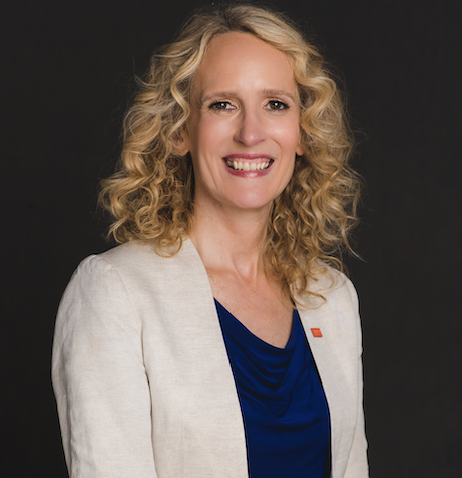
Dr. Cindy Cooke is a board-certified family nurse practitioner and advocate for leadership, legislative change and interprofessional collaboration with decades of primary care clinical practice experience focused on military families and rural communities. Dr. Cooke consults on health promotion and wellness and has spoken locally, nationally and internationally on a variety of clinical and health policy topics. Dr. Cooke is a past president of the American Association of Nurse Practitioners (AANP). She is a Fellow of AANP and adjunct faculty at the University of Mary in Bismarck, ND in the MSN-DNP program in Organizational Leadership, teaching Healthcare Finance and Economics, Healthcare Policy and Advocacy and Interprofessional Collaboration.
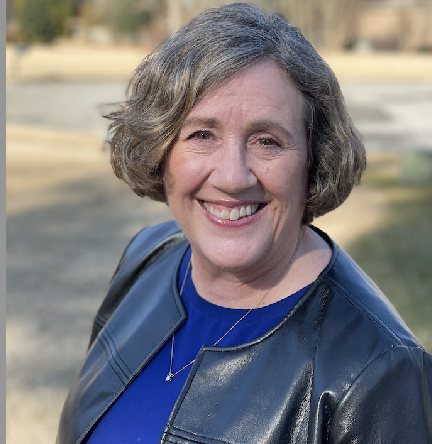
Our existing network includes other leaders with robust expertise in serving specialized populations and communities:
The RAAN is also essential in supporting Reservoir’s work in health equity, ensuring that we bring a diverse set of voices to the table as we seek to advance programs and policies that reduce health disparities and ensure equal opportunity for health.
If you would like to learn more about Reservoir’s offerings surrounding alliance development and stakeholder engagement, please reach out to Lee Lynch or Michelle Nealy for more information.

To achieve health equity, health professionals must include and prioritize the experiences of those living in rural communities. More than one in six people live in rural America, a testament to the vital role rural communities play in our nation’s economy, infrastructure and culture. As many rural hospitals across the country struggle to remain open, the opioid crisis continues and the life expectancy gap between rural and urban Americans widens, effective and collaborative solutions are necessary to meet the diverse needs of this large population.
When pursuing successful community engagement, it is important to consider the following factors:
Rural communities are ethnically, racially, politically and economically diverse. In fact, one in four individuals residing in rural America is a person of color. Engagement reflecting the diversity present within rural America supports the unique needs of diverse rural communities, leading to more effective policies that foster health equity.
Empowering communities in rural America is most effective when engagement is direct and collaborative. Thoughtful engagement cultivates trust and creates opportunities for impactful conversations addressing barriers to care, privacy concerns and social stigma surrounding sexual and mental health. Effective collaboration requires efforts that unite diverse rural stakeholders – including health care providers, community leaders and policymakers – to collectively identify challenges, develop initiatives and implement solutions resulting in lasting change.
Thoughtful messaging empowers community engagement. Inclusive communication utilizes terminology and language familiar and respectful of every rural community and involves actively listening to rural residents, understanding their unique needs and perspectives, and ensuring their voices are heard in decision-making processes. This approach strengthens relationships and creates an environment for meaningful engagement.
Rural stakeholders hold significant influence within the political landscape, creating opportunity to play a pivotal role in the advocacy for, and advancement of, systemic changes that promote health equity. By engaging with policymakers, rural stakeholders and advocacy groups, we can raise public awareness of the unique challenges rural communities face, with the aim of implementing necessary policy reforms.
To address rural health disparities, we must embrace innovative approaches that leverage technology, interdisciplinary collaboration and creative solutions. By encouraging partnerships between health care providers, pharma and biotech companies, research institutions and community organizations, we can develop scalable and sustainable interventions.
Collaborative approaches leveraging stakeholder influence and innovative solutions can serve as powerful drivers for health equity reform. Strategies derived from this framework propel vital initiatives that reduce health disparities and yield long-term benefits for all Americans by fostering a more inclusive environment for a strengthened and healthy nation.

With nearly half of American women forgoing critical preventive care services post-pandemic, May’s National Women’s Health Month serves as a call to action for policymakers, advocates, and health care providers to come together and advance collaborative policies prioritizing the well-being of all women and girls, ensuring equal access to health care and life-saving preventive measures.
As a nationally recognized leader in women’s health, Millicent Gorham, CEO and Chair of the Board of the Alliance for Women’s Health and Prevention (AWHP), has championed innovative policy solutions to address health equity, reduce health disparities and improve health outcomes for more than three decades. We sat down with her to discuss the current women’s health landscape, the value of partnership and mentorship, and her collaboration with the Reservoir team.
Reservoir: As we wrap up National Women’s Health Month, it must be a busy time for AWHP. What is AWHP’s focus and what are the most pressing issues you’re currently working on?
Millicent: The Alliance for Women’s Health and Prevention’s focus is on policy relating to women’s health from a prevention point of view, with a health equity lens. Our priority is to drive policy to ensure women get the right preventive health screenings, by the right providers, at the right time.
In January, AWHP commissioned a survey with Ipsos that revealed nearly half of American women are forgoing preventive care services. Our priority is to promote policies that increase access and remove barriers to care. Our current focus is on breast cancer, cervical cancer, colorectal cancer, osteoporosis preventive care and vaccinations, as we recognize these preventive health screenings and vaccinations as important life-saving measures.
We proactively engage on current issues. For instance, the United States Preventive Services Task Force recently updated their breast cancer screening recommendations encouraging women to start screening at age 40, followed by screenings every other year. Lowering the age for initial screening is good news, but we are pushing for annual screenings in recognition of the science suggesting women are getting breast cancer at an earlier age.
Reservoir: What do you wish more people would know about the unique considerations within women’s health?
Millicent: Women need to make sure they are taking care of themselves in addition to taking care of everyone else. When Mama goes down, the whole family goes down. There are preventable, significant consequences to families and the workforce when a woman becomes ill. We need to look at women’s health holistically, encouraging men, partners and workmates to support women in getting their preventive health care services.
Reservoir: AWHP is a new organization. As you’re looking to educate and engage with other like-minded stakeholders within the Beltway and nationally, what do you look for in these partners?
Millicent: We are looking for thoughtful and respectful partners committed to our aligned goals that recognize women have unique health care needs. I want to walk hand-in-hand with our partners – sharing assets, resources and successes.
AWHP can partner with organizations on a number of issues, such as mental health, maternal health, obesity, vaccinations and more. We frequently engage with our partners on vital initiatives. Recently, our current partners joined us by signing a letter urging the administration to preserve the ACA preventive care requirement. We also have a wonderful AWHP Board and Advisory Council that informs our work and provides recommendations for mutually beneficial partnerships.
Reservoir: Speaking of relationships, we know mentorship is incredibly important to you. Why is that?
Millicent: I am a collector of people – I have met many wonderful people, and I enjoy helping people navigate and bring excitement to their lives. From a professional perspective, one of my tenets is we should never be more than three clicks away from getting what we need.
As a mentor, I not only guide my mentees but also advocate for their advancement and push to open doors and create opportunities for them. Relationships evolve over time and are a mutual exchange of support and knowledge. Mentorship goes beyond just sharing advice; it’s about empowering individuals to find personal independence and represent excellence in our professions.
Reservoir: The Reservoir team has been privileged to work with you and AWHP from the start. What do you find unique about working with our team?
Millicent: These are some of the most brilliant women who can craft powerful messages by working together to bounce ideas off one another, expand on each other’s ideas and quickly execute. The efficiency and speed with which ideas are turned into action is truly impressive. What sets Reservoir apart is their excellence in everything they do.
I also appreciate the team’s energy; it not only fuels productivity but also brings enthusiasm to our collaborations, and I love the mutual support and recognition shown to one another. I can truly say I have laughed and smiled every day I have been here.
Please note: This interview has been edited for brevity.

Less than a year ago, I was unsure about what the future held. Only two things were certain: I would be graduating from college soon, and I had secured an internship with Reservoir Communications Group for my final semester. My internship was a chance to gain valuable professional experiences and explore a potential career path, but I didn’t know exactly where it would lead me.
As it turned out, my internship with Reservoir proved to be a catalyst for my career path and future at the firm as an Associate. The unparalleled skills and experience I gained during my time as an intern provided me with a solid foundation for my transition to a full-time position.
As I reflect on this transition, four essential lessons played a significant role in shaping my experience and professional growth:
Over the past four months, I have been able to take on more responsibilities and expand my skill set. As I’ve navigated the transition from intern to full-time employee, I’ve been fortunate to grow, personally and professionally. I am grateful to be part of a supportive team that constantly encourages me to reach my full potential, and I am excited to see what my future at Reservoir holds.

The struggle for visibility, equity and support for Asian American and Pacific Islander (AAPI) communities has never been more urgent. Incidents of hate reached new heights at the onset of the COVID-19 pandemic, and the fight for representation in conversations around minority health is ongoing.
The term AAPI is used to describe a diverse population of 23 million people who make up the fastest-growing racial/ethnic group in the U.S., with roots in more than 40 countries. The AAPI community represents some of the highest and lowest income earners in the country. Health data on AAPI communities are often lumped into one category, masking the meaningful differences among the numerous AAPI subgroups. Given the disparities within and the sheer enormity of the community, disaggregated data have proven to be a significant challenge in driving health equity.
As our nation marks Asian American Pacific Islander Heritage Month, we talk to Dr. Eliza Chin, Executive Director of the American Medical Women’s Association and Assistant Clinical Professor (Voluntary) of Medicine at University of California, San Francisco, about the needs of AAPI communities and how health care leaders can use this knowledge to inform their work.
Reservoir: What inspired you to pursue a career in medicine?
Dr. Chin: I didn’t grow up thinking about medicine as a career. When I was young, I wanted to be a teacher. In college, I realized that I really enjoyed science, and I also liked working with people. Medicine became a way of blending both of those passions. Yet it wasn’t until my third year of medical school that I realized I had made the right choice, when I experienced the thrill of taking what I learned in the classroom and applying it to the care of patients.
Reservoir: May is Asian American and Pacific Islander Heritage Month. Sadly, when it comes to conversations about health disparities, AAPI communities aren’t always included. How can health care leaders and policy makers better prioritize the needs of the AAPI community?
Dr. Chin: Many people do not think about the AAPI experience when it comes to minority health, but we have to give all people of color an opportunity to share their experiences. Different communities face different health issues. We have to tackle inequity from these diverse perspectives and work to ensure that the AAPI community isn’t being left out.
We have to be intentional. Too often, people think of the AAPI community as the ‘model minority,’ and somehow that stereotype doesn’t include the experience of racism. Yet I remember the racial slurs hurled at me as a teenager, even when just stepping outside my house. Being one of the ‘model minority,’ doesn’t mean we haven’t struggled to navigate a place in the world when we don’t necessarily look like everyone else.
Reservoir: What are some of the unique health challenges facing AAPI communities and how does disaggregated data help bring about meaningful change?
Dr. Chin: We are a large and diverse group. I never thought about health care disparities until I saw various subgroups within the community drive different awareness campaigns, for example, related to screening for diabetes at a lower body mass index or encouraging the need for early screenings for osteoporosis. The stigma around mental health within AAPI communities has been especially prevalent.
Many AAPI communities also grapple with a mindset of neglect that poses a barrier to care. Given the perceptions around being the ‘model minority’ and the value placed on success and achievement, some people may not be so forthright about talking about challenges that they have experienced. These are the kinds of issues health care leaders must understand as they approach their work with AAPI communities.
Really, data comprise the missing piece. When you begin to look at the data of various subgroups within the community, you can see that the disparities are not uniform across the AAPI population.
For instance, in a report from the National Cancer Institute, the incidence of cervical cancer appears lower compared to white Americans when the data are aggregated for all Asian Americans. When disaggregated by subgroups, however, we observe that rates are much higher in Vietnamese and Cambodian women but lower in Chinese and Asian Indian women.
In arenas beyond health care, data are also challenging traditional assumptions. For example, despite perceived notions about the AAPI community as the ‘model minority’ group, we haven’t grown in leadership ranks for companies and institutions in the way that one would expect. It is in the data that you start to see these disparities.

Last night we celebrated the 33rd annual Society for Women’s Health Research (SWHR) awards dinner and I came away so inspired. This powerhouse of an organization is a big reason why we have offices on women’s health in the major federal agencies and why so many more women are included in clinical trials than they have been in the past. SWHR’s work continues today to improve women’s inclusion in research, access to treatments, and equity for all women. I am honored to support that work in my role as the organization’s board chair.
Dr. Julie Gerberding, the current head of the Foundation for the National Institutes of Health (FNIH) and first woman to lead the Centers for Disease Control and Prevention (CDC), captured what is at stake in her keynote address with a story about her own family. Dr. Gerberding recently hosted a surprise party to celebrate her mother’s 90th birthday. As an independent, active woman, her mother is the picture of aging well. In contrast, Dr. Gerberding recently attended her cousin’s funeral following her difficult battle with ovarian cancer. In her remarks, she emphasized that we need research to help prevent unacceptable outcomes like her cousin’s but also to improve our understanding of women’s health and wellness as they age so more women can reach their 90th birthday in good health.
To get there, Dr. Gerberding emphasized the need for partnership. In her role at the FNIH, she is instrumental in enabling public-private partnerships. But she also highlighted the importance of, as she calls them, “n of one” women – individuals who make a big difference through their hard work and ideas. We honored several such women with awards last night:
Achieving the advances we need so that more women can reach their 90th birthday in good health is a daunting challenge but Dr. Maki made a point in her remarks that stuck with me. In diagnosing Alzheimer’s disease one common exercise is to ask patients to review and recall a list of groceries. Dr. Maki received knowing chuckles from the audience as she described how her research showed inherent bias in this task; women overperformed in remembering grocery lists – leading to false negative results – and men, on average, underperformed – leading to false positive results. In the grand scheme of medicine this is a small example but when it comes to individual lives it can make a world of difference to account for sex differences in research.
We need to shine light on our blind spots and raise up women and champions for women throughout the health research and care continuum. The challenge is great but with powerhouse organizations and “n of one” champions we’ll continue to make progress.
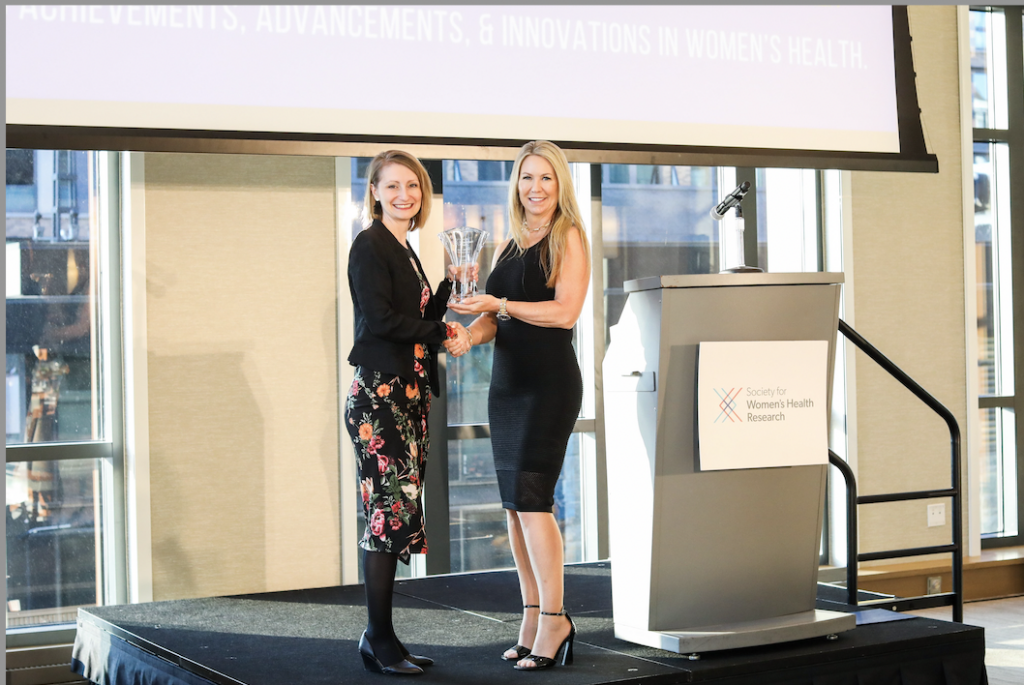
Gretta Stone presenting the Health Industry Visionary Award to Horizon Therapeutics at the SWHR Gala. Ms. Keli Walbert, Chief Marketing Officer accepting the award on behalf of Horizon.

Access to health care has increasingly been determined through some form of value assessment. However, frequently these assessments do not systematically or completely account for equity. In fact, conversations around value and equity have traditionally remained siloed, resulting in hardcoding of inequity in our current assessment models. Recently, Reservoir Communications Group convened a webinar with leaders in value assessment, health equity, and population health to discuss the question: can we have value without equity?
Our featured panelists included Cesar Herrera, Yuvo Health; Dennis Heaphy, Massachusetts Disability Policy Consortium; Marshall Chin, University of Chicago; and Orriel Richardson, Morgan Health. Their key point of agreement: we must intentionally place equity at the core of value assessment to design care systems and treatments that benefit diverse communities. Other key takeaways from the conversation included:
Richardson noted that equity must be incorporated into how we assess value because if our “value benchmarks are based on deficient data or a deficient understanding, then we are baking that deficit into our understanding of optimal care.” Herrera provided a practical perspective, noting that upstream health care must be accounted for in developing new value-based arrangements, and that all stakeholders “need to understand the full system and community needs” to optimize health for all communities.
Heaphy stressed that value “must look at the social benefit not just the monetary benefit,” and that assessment measures like Quality Adjusted Life Years (QALYs) can discriminate against some communities and eventually harm society. Noting that “health care can play an important role in elevating the value of people,” he recommended stakeholders look at the long-term return on investment from a treatment or service (e.g., healthy workforce, equitable society), not just the short-term savings that may guide access decisions and further inequities.
When uniform care is the norm, Chin noted that equitable care requires us “to involve the community authentically because the community knows best what the drivers of health inequity are.” Intentionally gathering data about what is driving access barriers and how to structure systems to address these needs can calibrate future value-based frameworks rooted in health equity. “Interdisciplinary conversations and cross-sector partnerships” are critical too, said Richardson, so we don’t medicalize value but instead provide patient-centric care.
A full recording can be found here.
Additionally, if you would like to learn more about Reservoir’s offerings surrounding value and health equity, please reach out to Courtney Tyne (ctyne@reservoircg.com) or Michelle Nealy (mnealy@reservoircg.com) for more information.

For the past five years I have traveled to Guatemala to volunteer with Mayanza, a not-for-profit organization providing health education to school-aged children and mothers in Santiago Atitlán. When I started this effort, it was for me – to get away from my laptop, utilize my skills as a clinician and provide care to others; but now, I continue for them – to learn from and support the tenacious community that represents resilience and resourcefulness.
My annual trips feed my passion to support health – and are constantly teaching me lessons that lift me up even when I’m back home. Here are a few things I’ve learned that help me be a better professional:
1 – Change comes from listening. My calling as a nurse leads me to observation, advocacy and problem solving. During my visits, I have led needs assessments and conducted discussion groups to engage with school leaders and mothers to inform programming. The biggest payouts are seeing how Mayanza’s tailored programs are appreciated by the community. Yet, most affirming is hearing from school principals: “thanks for taking time to listen to us and hear our needs.”
2 – Health concepts require clear definitions. A profound lesson was provided when asking mothers about their health goals and barriers. To my surprise, the most common answer was: “what is health?” This was not an error in methods, or a translation breakdown; it is an important question the community forces us to reflect on. It reminds me that health is not a singular goal or defined by one core definition. It is constantly evolving and made up of countless qualities and inputs. As I continue to promote health with the children and families of Santiago Atitlán, I must be vigilant in flexible thinking and clear about how I define and communicate about the broad concept of health.
3 – Systems drive health outcomes. Malnutrition, infectious disease, and chronic illness are rampant in Santiago Atitlán. So are domestic violence, substance abuse, depression, and anxiety. It is insufficient to address health problems in isolation of the economic and social structures that surround them. Our efforts have expanded to include Mayan-led conversations about mental health and reproductive rights, and our mothers’ groups provide peer support that are building self-confidence and healthy relationships that can lead to economic self-sufficiency.
4 – Working together is the only way forward. The health fairs hosted during our latest visit were emblematic of the virtuous cycle that comes from working together. Graduates of our Healthy Mothers program and student ambassadors led education stations about oral and hand hygiene, taught about iron-rich foods to mitigate anemia and ran physical fitness sessions. The women were confident to share their knowledge with peers and proud to create positive changes for health-promoting behaviors. It was humbling to notice how learning thrives when the community is engaged in the local Mayan dialect, Tz’utujil.
5 – Cultural appreciation brings affinity. My orientation before the first trip set my expectation that we visit a community that is truly in need, yet is a place that is magical with rich traditions, warm hearts, and lush landscapes. So, I was not surprised to fall in love with the people, the place, and their traditions – and I enjoy each return visit as a much-needed refuge that puts wind in my hair from the back of a truck and reignites my curiosity and compassion.
Promoting health and advocating for others are core to who I am, as well as my vocation. I feel privileged to visit the community of Santiago Atitlán to have a direct, positive impact on the health of others. And while that is meaningful and necessary, the trips also remind me that system change promotes greater health outcomes – and those changes only come from careful listening and collaboration with people in their communities.