Perspectives on the forces shaping health
Reservoir Health experts share analysis and ideas on the dynamics shaping health care decisions.

Reservoir Health experts share analysis and ideas on the dynamics shaping health care decisions.
Health care decisions are shaped by policy, evidence, trust, market dynamics, public debate, and individual experiences of patients and stakeholders. We share our perspectives to help leaders make sense of those forces and identify what to do next.
Reservoir Communications Group Rebrands as Reservoir Health, Reflecting Breadth of Health Care Expertise & Capabilities
New identity reflects firm’s integrated capabilities across policy, market enablement, and communications with a dedicated focus on helping health innovation reach patients
WASHINGTON, D.C., September 2, 2026 — Reservoir Communications Group today announced that it is now Reservoir Health, a new brand that reflects the firm’s longstanding focus on health care and expanded capabilities to help innovators shape policy, communications and market environments in support of patient access.
“Health care has always been our North Star, and our new brand reinforces our deep subject matter expertise and experience working across the health system and the innovation lifecycle to deliver creative, data-driven solutions that support patients,” said Robert Schooling, Reservoir Health Founder and President. “Our growth and expansion in policy, market enablement, and communications over the last decade has allowed us to serve as our clients’ ‘go-to’ for their most complex challenges and issues.”
Since its founding in 2014, Reservoir Health has grown from a public affairs and communications firm into an integrated strategic advisory firm for health care innovators. Its team brings experience from across the health system—including government, politics, media, patient advocacy and care delivery—and serves innovative life sciences and health care companies, trade associations and nonprofit organizations.
In November 2024, Reservoir Health announced an investment partnership with Periscope Equity, a Chicago-based private equity firm that partners with founder-owned, technology-enabled business services companies. The partnership between Reservoir Health and Periscope has focused on accelerating the firm’s growth and scale while broadening the firm’s capabilities in support of existing and new clients.
Reservoir Health’s expanded model is further strengthened by its recently announced acquisition of Applied Patient Experience, LLC (AppliedPX), a leading patient engagement and patient-centered research consultancy. The combination introduces a fully integrated patient evidence capability to Reservoir’s existing work across policy, communications and market readiness and positions the firm to help clients translate patients’ lived experience into decision-grade evidence that informs clinical development, regulatory strategy, market access, and patient and provider adoption.
Reservoir Health’s work is underpinned by its research team which delivers strategic insights and a clear roadmap for engagement through advanced qualitative and quantitative platforms, including our proprietary PRISM model.
To learn more about the Reservoir Health team, click here. For Reservoir Health Insights, click here.
Reservoir Health is a leading health care consultancy that helps innovators anticipate and shape the environments—policy, communications, and market—that determine which innovations reach patients. Based in Washington, D.C., the firm brings decades of experience across the health system, government, media, and patient advocacy to deliver integrated, data-driven solutions to health care’s most complex challenges.

Employers have long played a critical role in shaping health benefits, but today’s policy and market shifts are amplifying their influence in new ways. Recent reforms focused on PBM transparency, fiduciary accountability and pricing structures are giving employers greater visibility into how pharmacy benefits are designed, managed and evaluated. With that visibility comes increased opportunity, and expectation, for employers to ask harder questions about how benefit design can better support affordability, access and value for their workforces.
Broader industry disruption is further accelerating this trend. As new direct-to-employer and direct-to-patient access models emerge and scrutiny around cost and value intensifies, employers are becoming more central to how therapies are assessed and ultimately covered.
This shift won’t look the same across the market. Larger, more sophisticated employers may take a more hands-on role in shaping benefit design, formulary decisions and PBM relationships. Others may continue to rely on trusted partners, consultants or employer coalitions. Many employers may increasingly ask for data to help them determine whether utilization management is justified, whether out-of-pocket costs align with value or whether coverage decisions support workforce health in the long term.
The direction is clear: employer influence is growing and increasingly consequential.
For innovators, this evolution underscores the need for a more intentional approach to employer engagement. Traditional market access strategies have focused on health plans and PBMs, but employers bring a distinct perspective that warrants dedicated approaches. Their decision-making is often grounded in a broader view of value, one that balances total cost of care, employee affordability, workforce continuity, productivity, disability trends, retention and long-term health outcomes.
This creates both a challenge and an opportunity. Companies bringing new therapies to market must rethink how they develop evidence, communicate value and engage stakeholders, ensuring that their approach resonates with how employers assess trade-offs and make benefits decisions. Clear, relevant and practical insights — particularly those that connect clinical value to real-world workforce impact — will be critical. Employer engagement cannot simply rely on a repurposed payer narrative. It will require a tailored understanding of employer priorities, evidence that connects therapeutic value to workforce needs and education that meets benefits decision-makers where they’re at and through the channels and resources they already rely on.
What Innovators Need to Build Now
To prepare for this shift, innovators need to develop a more nuanced understanding of how benefits leaders assess value, affordability and workforce impact. This requires listening to employers directly; understanding how coalitions, benefits consultants and purchaser organizations shape benefit priorities; and translating clinical and economic evidence into insights that are relevant to benefits decision-making.
Having an integrated access strategy can be especially valuable. Companies should consider how employer perspectives are reflected across market research, evidence generation, value communications, stakeholder engagement and education. Practical areas of focus could include:
The goal is not to “market” to employers in a traditional sense, but to ensure that employers have credible, practical information that helps them assess whether benefit design supports access, affordability and better health outcomes.
As employers play an increasingly influential role in access decisions, innovators that proactively build employer-focused strategies into their market access approach will be best positioned to anticipate scrutiny, support more informed benefits conversations and build trust with stakeholders. In this new era, access strategy must account not only for how therapies are covered, but for how coverage decisions are understood, justified and trusted by the organizations responsible for delivering benefits to millions of Americans.
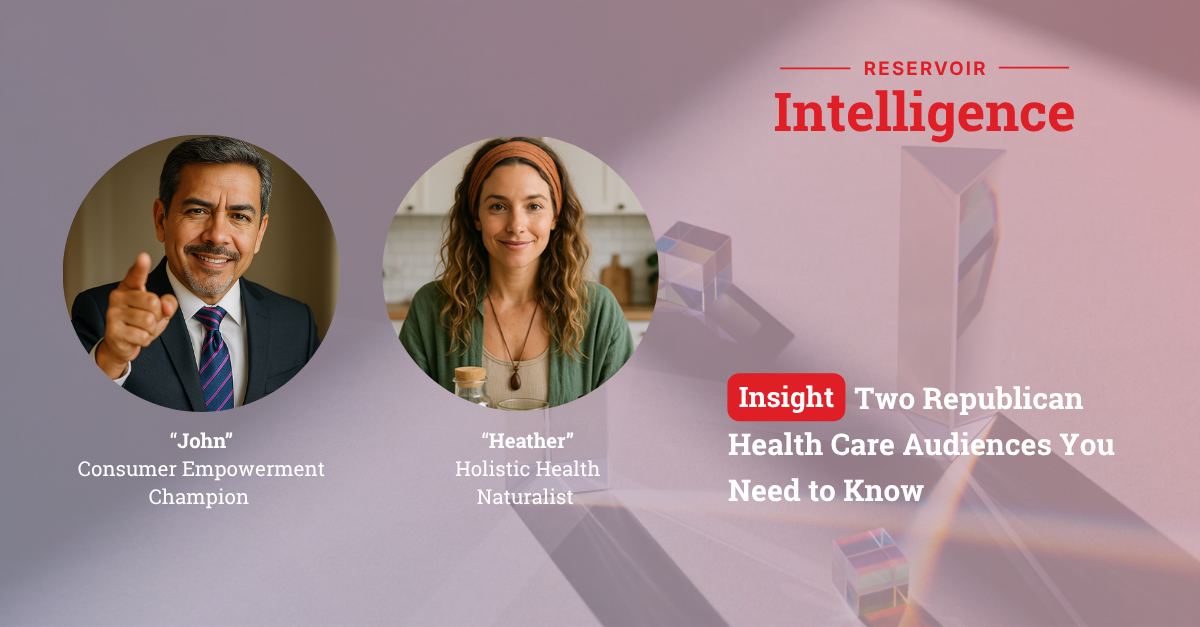
On both sides of the aisle audiences are splintering on health care in ways that are increasingly driven by deep differences in trust, and fundamental beliefs on science, autonomy and market ideology.
Understanding where each audience falls along these new fault lines is the first step to communicating with them effectively.
Our research has identified 16 distinct audience segments – each with their own unique values and belief systems.
This month, we’re spotlighting two of those segments:
Who they trust could not look any more different. Holistic Health Naturalists have the lowest trust in science and are least likely to trust doctors. Consumer Empowerment Champions trust health care providers and health technology companies more than other Americans.
Holistic Health Naturalists prioritize GMO labeling, natural remedy recognition and food transparency; Consumer Empowerment Champions want price transparency, competition and consumer choices.
Holistic Health Naturalists want to hear about alternative approaches to modern medicine and environmental sustainability. Consumer Empowerment Champions respond to solutions grounded in the free market and putting patients first. The same messages will not work for both.
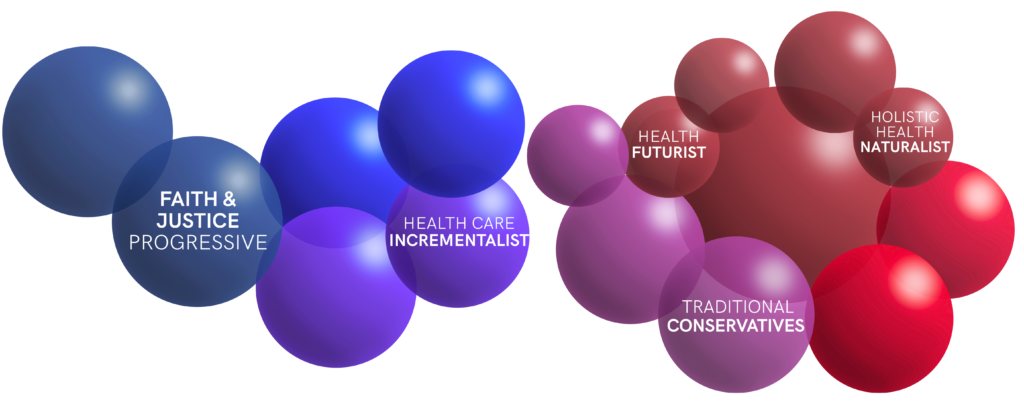
Reservoir’s audience intelligence platform, PRISM, maps 16 distinct audience segments across the health care landscape, each with distinct values and belief systems.
The Holistic Health Naturalists and Consumer Empowerment Champions are just two of 10 Republican segments – each requiring a tailored approach.
Get in touch to learn more about how PRISM can inform your strategy: prism@reservoirhealth.com
.jpeg)
A new study from Reservoir Communications Group reveals that U.S. biopharmaceutical investment plays an important role in driving industry reputation and informing views on policy and innovation among today’s health care audiences.
U.S. biopharma companies are ramping up domestic manufacturing investments – but awareness is low. The data shows that how these investments are communicated can significantly shape reputation and policy support.
Reservoir used PRISM, our audience intelligence platform, to measure how awareness of U.S. manufacturing investment impacts perceptions across increasingly fragmented audiences.
The big picture:
Clear, targeted messaging about the scale and impact of industry investment improves reputation, strengthens belief in U.S. leadership and influences policy views.
Communicating domestic investment isn’t just informative – it’s persuasive. Done right, it can improve perception, reinforce leadership and shape policy outcomes.
Get in touch to learn more about how PRISM can inform your strategy: prism@reservoirhealth.com.

A new study from Reservoir Communications Group reveals that U.S. biopharmaceutical investment plays an important role in driving industry reputation and informing views on policy and innovation among today’s health care audiences.
U.S. biopharma companies are ramping up domestic manufacturing investments – but awareness is low. The data shows that how these investments are communicated can significantly shape reputation and policy support.
Reservoir used PRISM, our audience intelligence platform, to measure how awareness of U.S. manufacturing investment impacts perceptions across increasingly fragmented audiences.
The big picture:
Clear, targeted messaging about the scale and impact of industry investment improves reputation, strengthens belief in U.S. leadership and influences policy views.
Communicating domestic investment isn’t just informative – it’s persuasive. Done right, it can improve perception, reinforce leadership and shape policy outcomes.
Get in touch to learn more about how PRISM can inform your strategy: prism@reservoirhealth.com.

A question we often hear from clients is: Even though we have data showing what’s happening across patient groups, why can’t we explain the reasons behind patient behavior?
Adherence rates drop off a cliff at 90 days. Awareness campaigns reach people who still aren’t seeking care. Insured patients skip the preventive visits their plan covers.
The data captures the outcome. It stays silent on the decision that produced it.
That silence is where a patient-centered insights approach, Patient Access Pathways, lives.
What traditional data misses
Patient journey maps and claims data are remarkably good at recording what happens inside the health care system, but they reveal little about what happens outside it. The moment a prescription feels too confusing to fill, a preventive visit where a provider assumes a patient’s knowledge or the hours spent navigating insurance before giving up entirely — these are the decisions that shape whether patients enter care, stay in it or quietly fall away.
They don’t generate claims. They don’t appear in registries. Yet they are often the most consequential part of the story.
Reservoir’s Patient Access Pathways sits at the intersection of human-centered research and rigorous survey methodology — designed to uncover and measure the moments that determine whether patients engage in care or disappear from the data.
To understand what Patient Access Pathways reveals in practice, consider the following examples. In each case, the data pointed to one explanation — but the patient’s perspective told a different story.
The woman who knew, but never went
In a national study on women’s preventive health, we found something that upended the entire communications strategy built around it: awareness wasn’t the problem.
Nearly eight in ten women were already familiar with their care options, but only one in five had accessed health care in the past year. The gap wasn’t knowledge. It was the conversation that never happened. Only a third of women had discussed their health risks with a provider, yet most said they would seriously consider treatment if that conversation had taken place.
The insight shifted the strategy entirely: away from reaching more people with more information and toward enabling providers to initiate conversations and address the structural barriers that persist even when awareness exists.
The patient who kept trying to fill her prescription
In a study of patients with a serious cardiovascular condition, low treatment persistence was widely attributed to side effects or disengagement. In reality, the main issue wasn’t how the medication was tolerated; it was what it took to get it. Hours spent navigating a complex system: one in four patients reported spending five or more hours in a three-month period just trying to access a prescribed medication.
Patients weren’t disengaging; they were being worn down by the process of accessing treatment.
That distinction shifted the intervention point — from patient education to the access process itself, and from adherence to navigation support.
The insured person who never used what she paid for
In a third study focused on insured individuals, satisfaction metrics appeared strong — nine in ten reported being at least somewhat satisfied with their plan.
But when we looked deeper, a more complicated picture emerged. Many patients couldn’t anticipate what their care would cost, weren’t sure which services were covered or didn’t know how to access benefits they were already entitled to. That comprehension gap had real consequences: patients were deferring care, skipping preventive visits and disengaging from a plan they were otherwise satisfied with — not because the coverage wasn’t there, but because navigating it felt out of reach.
Why this matters
Each of these studies began the same way: solid data, a reasonable hypothesis and a strategy built around both. And in each case, the patient’s perspective revealed a different reality — one that administrative data alone couldn’t capture.
These weren’t cases of non-adherence, lack of awareness or true satisfaction. They were stories of friction, missed moments and structural barriers.
Patient Access Pathways exists to surface that layer of the story — not to replace claims data and journey mapping, but to explain what they can’t.
Because understanding the why changes where you intervene, who you target and what you actually build.
If you’re working with data, that tells you what’s happening — but not why — that’s the conversation we’d like to have.

The role of communications in health care has fundamentally shifted from amplification to strategic influence. Today’s communications leaders are responsible not only for showcasing innovation, but for shaping how it is valued and can be acted on by policymakers, payers, clinicians, patients and the public.
Within an increasingly fragmented environment, corporate communications is far from peripheral. It plays a central role in determining whether innovation achieves adoption.
Underscoring Value to Cut Through
Health care stakeholders are inundated with information overload from emerging science, policy developments and competing perspectives. What ultimately breaks through the complexity of this volume is how information is interpreted.
How evidence is framed influences how value is assessed. How narratives are constructed shapes whether stakeholders view an innovation as necessary, or essential. Value serves as the North Star, guiding through the noise.
Defining Value as Multidimensional
At the same time, value in health care is not a fixed concept. It is defined differently through the lens of each stakeholder. Organizations that succeed in communications are those that take an intentional approach to shaping how value is understood across their stakeholder audiences.
This requires building narratives that align scientific, clinical, economic and societal contributions into a cohesive story — one that is credible, evidence-based and tailored to stakeholder priorities. Organizations that do this well tend to share a common set of practices. They:
Achieving this demands more than message development. It requires grounding communications in a deep understanding of health systems, health policy and market forces — and using that insight to anticipate how communications will be received, challenged and acted upon.
Ultimately Enabling Patient Access
Effective corporate communications help ensure that innovation is interpreted in context, value is articulated in ways that resonate and stakeholders are equipped to make informed decisions. In this way, communications becomes a critical enabler of access.
By placing value at the center of communications strategies, organizations can position innovation so it is not only seen — but understood, trusted and meaningfully advanced. And in doing so, they can help shape a health ecosystem where interpretation drives greater clarity, stronger alignment and, ultimately, more meaningful outcomes for patients.

For decades, it was fair to assume that people’s views on health policy fell largely along partisan lines and that their views about their own health care were typically unrelated to their policy views.
That playbook no longer applies.
Today, health care sits directly at the intersection of the major political and cultural shifts reshaping the U.S. Audiences are divided not simply by party or demographics, but by deeper questions of trust, freedom and identity. Even everyday health care decisions are interpreted through the lens of people’s underlying beliefs and values.
These divisions are increasingly visible among policymakers as well. Within both parties, competing perspectives are shaping health care debates–-from “health freedom” and “wellness” movements, to competing priorities around cost and innovation.
In this environment, identifying the right audiences—and reaching them with messages that resonate—requires a deeper understanding of how values and beliefs shape the way people interpret health care information and policy.
PRISM was built for this moment. Our audience intelligence platform enables public affairs, corporate communications and brand and market insights teams to map the ideological profiles shaping health care engagement today.
At its core, PRISM maps the values and belief systems that form the “prism” through which audiences receive, interpret and act on health care information and messages—even when traditional audience categories stay the same. PRISM identifies 16 distinct health care audiences, each defined by a unique ideological profile that shapes how they think about health care.
“PRISM began with a simple realization: the categories we relied on to understand our audiences no longer match how people think about health. Patients, voters and policymakers are interpreting everything—from prevention to policy —through the lens of politics, culture, identity and trust. Once that became clear, it was obvious that we all needed a new way to see the landscape. PRISM was built to provide that map.”
PRISM pairs audience intelligence with execution, helping clients shape strategy, sharpen positioning and communicate with precision.
Health care companies can’t afford to operate with the assumption that traditional audience targeting measures provide meaningful explanations for how people act today. Audience intelligence that maps these nuances is the competitive advantage. PRISM provides that roadmap.
In our next issue, we’ll explore important new research on how the billions of dollars being in invested in R&D and manufacturing in the U.S. by biopharmaceutical companies is being received by voters.
We’ll unpack what companies need to know to ensure these investments resonate and create the opportunity for sustained dialogue and engagement with voters.
In the meantime, learn more at reservoirhealth.com/PRISM or email us at PRISM@reservoirhealth.com.

“Progress depends on the ability to engage with people whose perspectives differ from our own.” We recently spoke with Jennifer Mandel, a member of Reservoir’s Advocacy and Alliance Network, about what it means to communicate across differences — and how that plays out in health care. Jennifer has deep experience aligning different perspectives to advance health care, creating mutually beneficial partnerships with internal and external stakeholders and elevating organizational impact.
This interview has been edited for clarity and brevity.
Q: What best practices are you employing to craft messages to connect with a broad range of stakeholders?
JM: Ultimately, effective stakeholder communication requires humility, a willingness to learn and the recognition that lived experience is a form of expertise. First, find ways to balance any power dynamics, because the stakeholders doing the on-the-ground work are the experts. Relationships often get muddled because people are afraid to upend power dynamics, but those working in communities need to be trusted.
Second, taking time to listen is essential. Messages that resonate cannot be developed in a vacuum. They should be informed by the perspectives, priorities and lived experiences of those they are intended to reach. It is also critical to pressure test messages with trusted partners who have deeper insight into the community. Their feedback helps validate that the messaging is respectful, authentic and relevant.
Q: When communicating about health, what does “meeting people where they are” mean to you?
JM: Meeting people where they are means recognizing that the same message doesn’t work for everyone. Health information is more likely to resonate when it’s delivered in ways that reflect the community’s language, culture and lived experiences, and is endorsed by people they already trust.
During the COVID-19 pandemic, for example, an advocacy group in Maryland created an “abuela” (grandmother in Spanish) avatar to share vaccine information with Hispanic American communities in a familiar, culturally meaningful way. Efforts like this, along with outreach from trusted community leaders, helped make the information more relatable and credible.
It’s important to connect with the people seeking health care, and often that requires non-traditional messengers in addition to those delivering the care.
Q: How are you communicating about flashpoint health care issues?
JM: It is important to ground health communications in science and data but share it in ways that are clear, relatable and easy to understand. The goal is to inform, not overwhelm. We need to think about how we drown out the misinformation and bring forward trusted messengers from beyond the health care community: our educators, our social workers, our clergy.
Q: How are you approaching compromise in a way that doesn’t deviate from your core mission and values?
JM: Everyone deserves a seat at the table. Even when stakeholders disagree, it’s important to bring people together and create space for open, respectful dialogue. Progress happens when diverse perspectives are heard and valued, even if the paths forward look different.
The first step is aligning on a shared goal — a common North Star. While there may be differences in approach, keeping that shared purpose front and center helps guide the conversation. Meaningful progress often happens through small, incremental steps taken together. By staying grounded in shared goals and mutual respect, stakeholders can move forward in ways that build trust and create lasting impact.

Federal drug pricing policy is evolving at an extraordinary pace. With implementation of the Inflation Reduction Act (IRA) well underway and the recent announcements of new Center for Medicare and Medicaid Innovation (CMMI) models — GUARD and BALANCE to name a few — plans, manufacturers, providers and patients are navigating a rapidly shifting landscape. The volume and pace of change can be challenging to navigate. Read on for key implications, particularly for the Part D market and the patients who depend on it.
A Fragile Baseline: Part D in Transition
The Part D benefit is already undergoing historic restructuring because of the IRA (e.g., significantly increased plan liability, new annual out-of-pocket maximums). These reforms materially alter financial risk across stakeholders and have introduced heightened actuarial uncertainty for plan sponsors.
Early market indicators suggest strain. Over the past two years, the stand-alone Prescription Drug Plan (PDP) market has experienced contraction, with fewer plan options, volatile premiums and market exits. At the same time, the therapeutic mix is shifting (e.g., rise and expansion of GLP-1 therapies).
This is the baseline against which the new CMMI models will operate.
The New Models and Part D Impact
Although GUARD and BALANCE differ in design, they share a stated objective: improving affordability for patients and reducing federal spending. Yet the policy tools deployed may have unintended consequences for access and market stability.
Part D spending is increasingly flowing through mechanisms outside traditional plan management tools — whether through Maximum Fair Price (MFP) implementation, redesigned manufacturer discounts or model-specific payment adjustments.
As more financial flows are carved out or redirected, the portion of spending directly managed by plan sponsors shrinks. This raises important questions: How will plans manage spending trends if their flexibility over formulary design and utilization management is constrained? How will they account for risk in an environment where key cost drivers are partially externalized?
One potential consequence could be narrower formularies or more aggressive utilization management as plans seek to offset rising liability and uncertainty. While these strategies may be rational responses to risk, they can create friction for patients seeking timely access to therapy.
High-demand therapies such as GLP-1s introduce additional complexity. Utilization of GLP-1 therapies — initially concentrated in diabetes — continues to grow, with expanding uptake in obesity and additional indications under evaluation. If the new models create different financial treatment or coverage of incentives across plans, adverse selection becomes a real possibility.
Plans perceived as more permissive in covering GLP-1s — or better positioned to absorb their costs — may attract a disproportionate share of patients seeking those therapies. Concentrated risk could drive premium increases, prompt benefit redesign or accelerate market exits.
At the same time, uncertainty around coverage criteria may complicate patient decision-making. For patients evaluating plan options during open enrollment, variability in formulary positioning, prior authorization requirements or utilization controls from year to year could undermine confidence in coverage stability.
Each of the new models references affordability as a central objective. Yet affordability and access are not synonymous. Policies designed to reduce federal spending or redistribute liability can, if not carefully structured, introduce new access barriers.
Potential downstream effects for patients may include:
For patients managing chronic conditions, predictability is often as important as affordability. Frequent shifts in coverage or administrative requirements can erode trust and complicate care.
Implications for Stakeholders
In the near term, plans and manufacturers face immediate operational and strategic decisions, including model participation and formal comments (which were due February 23 for GUARD). These decisions must balance potential opportunities against the risk of market disruption.
Over the medium term, the interaction between IRA reforms and the CMMI models could create new structural fault lines within Part D. As financial responsibility shifts and new guardrails are introduced, the role of plan sponsors may evolve further — potentially narrowing opportunities for benefit differentiation.
Looking longer term, these policies will likely influence trends in benefit design and overall market competition. Most importantly, we will be watching to see whether patients experience greater clarity and stability — or increased complexity and limited access.
Looking Ahead
Layering multiple reforms onto an already transformed Part D benefit risks creating complexity rather than clarity. For patients, that could mean uncertainty: a therapy covered one year but restricted the next, shifting premiums and formularies that evolve faster than they can reasonably track.
For industry stakeholders, this moment calls for disciplined analysis, proactive engagement and a clear focus on the patient experience. As policy experimentation continues, success will depend on anticipating downstream effects and aligning policy strategy with long-term access goals.
The Reservoir team works at the intersection of health policy and communications to help clients navigate precisely this type of environment — where technical policy, access dynamics and patient impact converge. As GUARD, BALANCE and other CMMI models move toward implementation, thoughtful engagement will be essential to ensuring that affordability efforts translate into sustainable access for the patients that Part D was designed to serve.